Fiberglass Sandwich Panel Options by Core
Runfeng manufactures fiberglass sandwich panels with FRP skins and PU, XPS, EPS, honeycomb or plywood cores, so contractors, distributors, body builders and importers can match insulation, stiffness and weight to the job.
Request a quote for this product
- Established
- 2004
- Production lines
- 6
- Exports
- 80+ countries
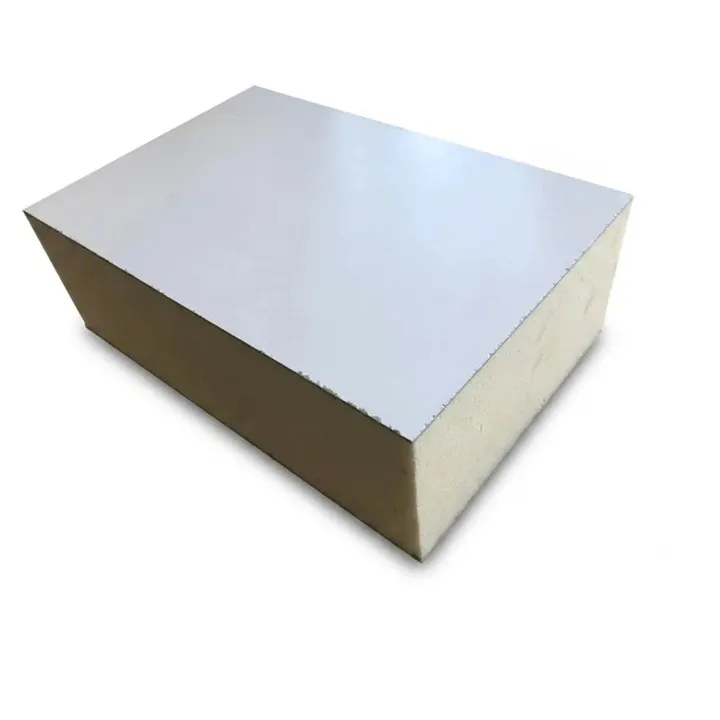
Fiberglass sandwich panel cores: PU, XPS, EPS, honeycomb and plywood
A fiberglass sandwich panel is FRP skins bonded to a core. The skins carry the face, colour and finish; the core sets insulation value, stiffness and weight. Runfeng groups the range by core: polyurethane, XPS, EPS, honeycomb and plywood, and each product on this page has its own specification table.
Fibreglass sandwich panels come with different cores and finishes, and skin type, gelcoat and panel format vary by product, so the core sections below are the place to start. Mineral wool insulation is covered in the rock wool sandwich panel guide, and body builders will find cargo box and dry-van options under truck body panels. For a quotation, send the application, core, skin and quantity through the inquiry form.
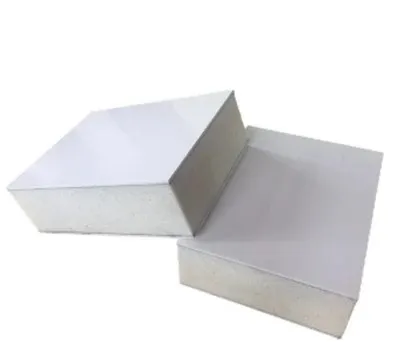
Two white-faced samples with exposed pale cores 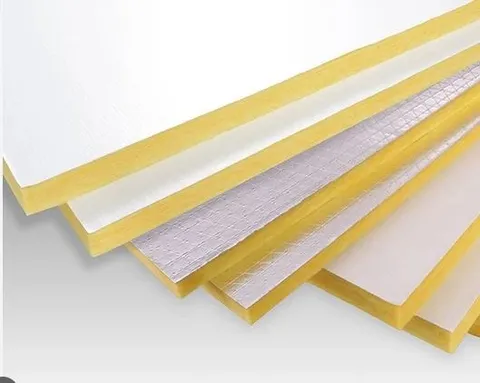
Layered white panels with yellow cores
Fiberglass sandwich panel products and specifications
| Parameter | Value |
|---|---|
| Design Style | Modern |
| Material | frp |
| Feature | Water Resistant |
| Model Number | 20240110 |
| Panel Material | Nonmetal |
| Product name | PU Sandwich Panel |
| Core material | PU Polyurethane 40kg/m3 |
| Thickness | 50-200mm |
| Color | RAL Color |
| Length | Max 11.8m |
| Width | 2.3M |
| Density | 40-42kg/m3 |
| Type | FRP Composite Sheet |
Polyurethane-core wall and roof panels
PU wall panel work usually comes from modular buildings and partitions, where a polyurethane foam core sits between FRP skins to form an insulation-led panel. For modular building projects, the FRP composite PU sandwich panel with polyurethane foam core and water-resistant insulation board for prefab use is the starting point, and its thickness options are set out in the specification table on this page. Send the wall drawing, skin, core and quantity for a quotation.
A polyurethane sandwich panel combines FRP skins with a PU foam core for insulation-focused building panels. Typical uses in construction are walls, roofs, partitions and cold-storage rooms, where the core reduces heat transfer through the envelope. The build follows the project, with skin finish, core and panel thickness matched to the wall or roof design. Route the exact build and quantity through the inquiry form.
A PU sandwich panel means a panel with a polyurethane foam core between FRP skins, used for walls, roofs, partitions and cold rooms in general terms. There is no universal thickness, so the specific build is confirmed through the quotation request. For a PU sandwich panel made to your wall or roof specification, the FRP PU foam core sandwich panel for modular buildings is the closest starting product here; send drawings, application and quantity through the inquiry form.
Honeycomb-core panels
Fiberglass honeycomb panels are chosen where stiffness and impact resistance matter in a lightweight panel. The honeycomb core carries shear between the skins, which keeps the panel light and stiff; this suits transport and dry-van work. Runfeng supplies the FRP PP honeycomb sandwich panel for truck body cargo box dry van wall, ceiling and floor use. Send skin, core, fixing detail and quantity through the inquiry form.
Honeycomb fibreglass panels are FRP-skinned panels built on a honeycomb core for stiff, lightweight assemblies, and in transport work they serve dry-van linings, partitions and cargo box surfaces. Fixings decide how the assembly performs: how the panel meets the frame, where fasteners land, and how edges are closed. Send the fixing details and quantity through the inquiry form.
EPS and XPS foam-core panels
EPS and XPS cores are low-density foam options chosen for insulated panels where weight and handling matter. Skin choice still decides the surface: a gelcoat face gives a smooth, closed finish, while a plain FRP face suits panels that will be covered or bonded into an assembly. Thickness, colour and panel size are confirmed per product in the quotation, and FRP wall panels covers wall-grade faces in more detail.
Gelcoat skins, transparent roof panels and order terms
Skins are where a sandwich meets the building. A gelcoat face is smooth and closed; a non-gelcoat face is left open for bonding or covering, and faces can be smooth or embossed.
Runfeng offers OEM and ODM work and develops panels to customer drawings, as set out under OEM and custom work. MOQ is confirmed by product and specification, and for some FRP sheet specifications it is 100 square meters. Free samples of stock items are available on request with the courier fee paid by the buyer. In-stock orders can ship within 7 days; non-stock orders take 7-25 days, confirmed in the quotation.
How an order runs
- Send your requirements
- The panel or sheet type, thickness, size, surface, color and quantity, with drawings for custom work.
- Samples and quotation
- Free samples of stock items are available on request, with the courier fee paid by the buyer; custom and special sample terms are confirmed on request. Runfeng replies with a quotation.
- MOQ and lead time
- MOQ is confirmed by product and specification in the quotation; many FRP sheets start from 100 square meters. In-stock orders can ship within 7 days; non-stock orders take 7-25 days, confirmed in the quotation.
- Packing and shipping
- Pallet or crate packing options and FOB Tianjin Port are confirmed in the quotation.
Request a quotation
Send the panel type, thickness, size, surface and color, and the quantity.
Or write to sales@frppanelmanufacturer.com